Buying Land Or Cabins In La Honda: Practical Guide For Buyers
Buying a cabin or a piece of land in La Honda can feel exciting right up until the practical questions start piling up. Is there water? Is there septic? Can you actually build what you want, and can you finance it? If you are looking at rural property in the La Honda hills, those questions matter just as much as price and location. This guide will walk you through the issues that deserve your attention before you make an offer, so you can move forward with more clarity and fewer surprises. Let’s dive in.
La Honda is an unincorporated San Mateo County community, which means many property questions are handled through San Mateo County rather than a city planning department. That matters because your review process, permits, and land-use questions often depend on county systems and county standards.
This is also not a market where every property works the same way. In La Honda, utility setup, road access, slope, drainage, and wildfire planning can vary a lot from parcel to parcel. That makes due diligence especially important whether you are buying vacant land, a rustic cabin, or a home that needs work.
Public water is limited in parts of La Honda. San Mateo County’s CSA 7 water system serves about 70 customers, so many parcels rely on private water solutions instead of a broad public system. For buyers, that means water is never something to assume.
Terrain also plays a big role here. County road work in and around Old La Honda Road, Scenic Drive, and Entrada Way has involved failed road sections, hillside reconstruction, geotechnical analysis, and temporary closures. In practical terms, slope and drainage can affect both access and long-term property use.
One of the most important early steps is checking zoning by APN, not just by street address. San Mateo County specifically tells buyers to use the parcel number because a property can have more than one zoning district or overlay.
That detail matters in La Honda because rural parcels may carry layers that affect what you can build and how long approvals may take. County guidance notes that RM, TPZ, and PAD are rural districts, while other overlays like Design Review or Coastal Zone can trigger additional review.
If you are evaluating land for a future home, a guest structure, or major improvements, this should happen before you get too far down the road. What looks like a simple parcel online may come with planning rules that shape your timeline and budget.
Some zoning categories deserve extra attention because they can be more restrictive than buyers expect.
If a property is in Timberland Preserve Zone, development requires a TPZ or TPZ-CZ permit, including construction of a single-family residence. If the parcel is also in the coastal zone, a Coastal Development Permit is required too.
That does not mean the parcel has no value. It means you should treat the purchase like a process-driven project and understand the approval path before you commit.
Resource Management zoning can also surprise buyers. San Mateo County says development in RM can include construction of a significant structure or even removal of trees over 55 inches in circumference.
If you are imagining clearing a site, adding improvements, or changing the land in a noticeable way, planning review may be part of the path. This is one reason rural property should be evaluated with site-specific questions, not assumptions.
The county states that Design Review, Coastal Zone, Resource Management, Planned Agriculture, and hazard overlays always require planning review first. Even if your intended use seems straightforward, these layers can affect approvals, timing, and consultant needs.
A common mistake is thinking building plans come first. In San Mateo County, planning approval comes before building approval, and several agencies may be involved in review.
The county notes that completeness review for planning permits is generally within 30 days. After that, plan-check agencies may include Building, Public Works, Fire, Civil and Drainage, and Geotechnical review.
Published timelines are useful, but they are not guarantees. The county lists many common planning permits in the 4 to 6 month range, including Use Permits, Resource Management Permits, Timberland Preserve Zone Permits, Grading and Land Clearing Permits, and hearing-level Coastal Development Permits. Minor Subdivision Permits are listed at 6 to 8 months.
Environmental review can add more time. San Mateo County says a Negative Declaration can add 2 to 3 months, while an EIR can add 6 to 12 months. Those estimates also do not include appeals or non-planning permits.
In La Honda, water and wastewater are not side issues. They are central to whether a property is practical for your plans.
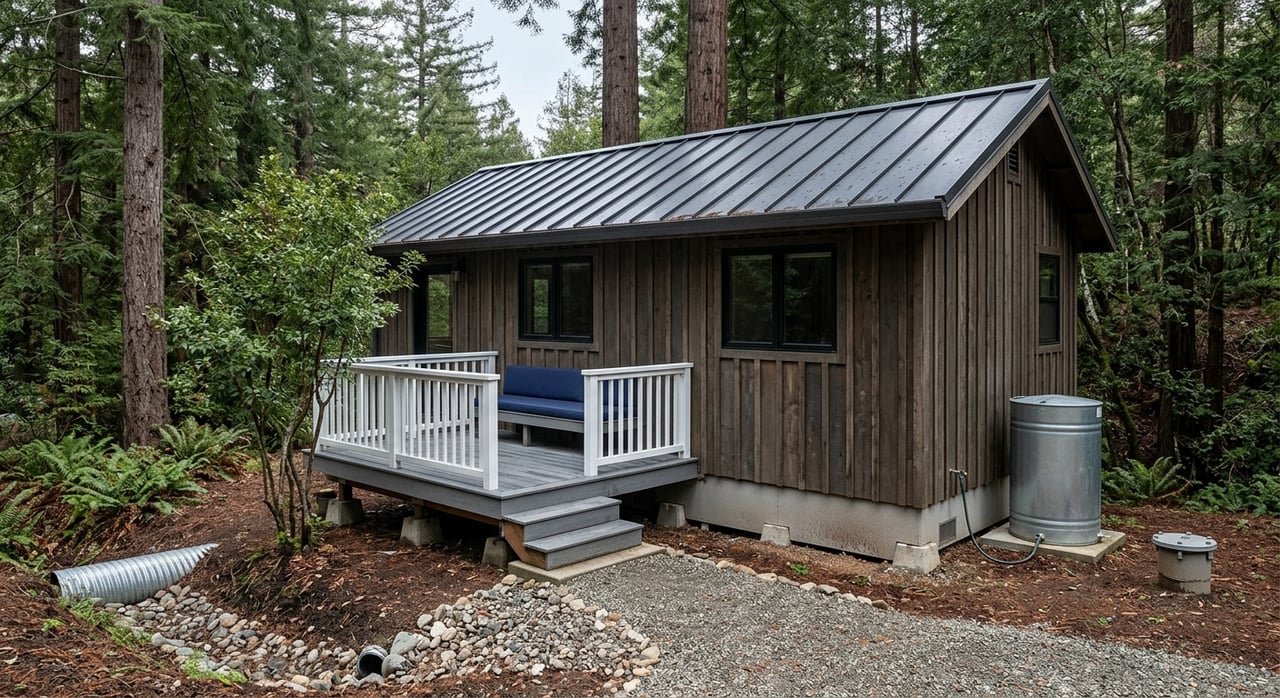
San Mateo County Health says all homes must have a safe water supply and a way to dispose of sewage and wastewater. In areas without sewer or community water, owners must install their own systems, and the county states that the only approved on-site wastewater system is a septic system.
This review is broader than many buyers realize. Environmental Health review can apply to parcels served by an on-site wastewater system or an individual domestic water supply well for projects such as bedroom additions, decks, grading, drainage work, and improvements outside the existing footprint.
If you are buying a cabin that seems usable today, do not assume future updates will be simple. A property’s well and septic status can affect what you can improve, how permits are reviewed, and how lenders view the property.
In a rural area, legal access is only part of the picture. You also want to understand physical access, road condition, and whether improvements may require county approval.
San Mateo County requires an encroachment permit for any new driveway or driveway widening or regrading in the county right-of-way. The county also points property owners to access checklists and private-road standard drawings.
That can become important if a lot looks buildable on paper but needs driveway changes to function well. It is also wise to understand who maintains the road serving the parcel and how weather or hillside conditions may affect year-round use.
In the La Honda hills, wildfire readiness is not optional background information. It is a practical part of owning and improving property.
County Fire says it operates a WUI Risk Reduction program, performs defensible-space inspections, and offers AB-38 inspections for real estate sales. The county’s preparedness guidance states that defensible space is the required 100 feet around the home.
You should also check the parcel in CAL FIRE’s Fire Hazard Severity Zone viewer. CAL FIRE classifies hazard as moderate, high, or very high, and it notes that these maps describe hazard, not risk. That distinction matters, but the map is still a key part of understanding site conditions and likely fire-planning obligations.
Financing can be one of the biggest surprises for buyers coming from a standard suburban home search. Vacant land and rustic cabins are often evaluated differently than move-in-ready houses.
Fannie Mae’s property guidance says the mortgaged property must be residential in nature, safe, sound, structurally secure, accessible by roads that meet local standards, served by utilities that meet community standards, and suitable for year-round use. Fannie Mae also says it does not purchase or securitize mortgages on vacant land or land-development properties.
For raw land, that usually means you may need a different loan product than a standard conventional home loan. If your plan is to buy land and build, construction-to-permanent financing may be the right discussion to have early with your lender.
For cabins that are usable but need work, a renovation loan may be worth exploring. Fannie Mae says HomeStyle Renovation can finance repairs, remodeling, renovations, and energy improvements, with the appraisal based on the as-completed value.
The practical takeaway is simple. In La Honda, lenders may look closely at access, habitability, septic and well status, fire-hardening issues, and whether the property is suited for year-round use.
Before you make an offer, it helps to organize your questions around the issues that matter most in this market.
La Honda can be a great fit if you want privacy, natural surroundings, and a different kind of property than you would find in a more standardized neighborhood. But these purchases are usually less about finishes and more about entitlement, access, utilities, fire readiness, and lender fit.
That is why local, practical guidance matters. You want to spot the deal-breakers early, understand what is solvable, and know when a property is worth the extra work.
If you are considering land or cabins in La Honda, working with someone who understands rural San Mateo County property can help you ask better questions from the start. When you are ready to talk through a parcel, a cabin, or your next move, connect with Frank Vento.