What It’s Like To Live In Downtown San Mateo
Looking for a downtown that feels easy to live in day after day? Downtown San Mateo stands out because it brings together dining, errands, transit, and open space in a compact area that is designed for walking. If you are wondering whether this part of San Mateo fits your lifestyle, this guide will help you picture the daily experience, the housing mix, and the overall pace of life. Let’s dive in.
Downtown San Mateo is planned as the city’s center, with a mixed-use layout that blends housing, retail, offices, and public spaces. The city’s Downtown Area Plan focuses on high-density residential and commercial development along with pedestrian amenities and transit and bike access.
In practical terms, that gives you a more compact, urban feel in the core rather than a spread-out suburban pattern. The retail heart of downtown is centered roughly between 1st and 5th Avenues, from El Camino Real to the railroad, so many everyday destinations sit within a short radius.
One of the biggest draws of downtown San Mateo is how much you can do on foot. The area is set up to support walking, with a concentrated mix of shops, restaurants, and services near the center.
A standout feature is B Street, which operates as a year-round pedestrian mall between 1st and 3rd Avenue. The city says this space supports outdoor dining and special events, while cross-street traffic still moves through at 1st, 2nd, and 3rd Avenues.
That design changes how downtown feels. Instead of being dominated by traffic, parts of the core are built for strolling, meeting friends, grabbing a meal, or running errands without constantly moving your car.
If convenience matters to you, downtown San Mateo offers a strong everyday setup. Caltrain describes San Mateo Station as being on B Street with immediate access to restaurants, bars, and shops, which reinforces how closely connected transit and downtown activity are.
A few local anchors also help shape the neighborhood rhythm. Caltrain notes that the Cinemark theater and the Main Library are short walks from the station, and the city confirms the Main Library is at 55 West 3rd Avenue, reachable by walking south on B Street and west on 3rd.
For you, that means downtown living can support a simpler routine. Whether you are heading out for dinner, picking up a book, or meeting someone for a movie, many activities are close together instead of spread across town.
A big part of what makes downtown San Mateo livable is its access to green space. Central Park is the signature park for the area, and the city says it spans 16.3 acres on the former Kohl estate.
The park includes the Japanese Garden, Rose Garden, mini train, playground, tennis courts, a baseball field, picnic areas, restrooms, and rentable spaces. It also hosts recurring community events such as the Music Series, 4th of July in the Park, and Eggstravaganza.
For downtown residents, this is more than a nice extra. Caltrain places Central Park about a five-minute walk from San Mateo Station, so it sits comfortably within the normal walking radius of downtown life.
That matters because it gives the neighborhood balance. You get the activity and convenience of an urban core, but you also have a substantial public space nearby when you want a break from the pace of downtown streets.
If you commute or simply want options for getting around, downtown San Mateo has strong transit access. San Mateo Station is the neighborhood’s Caltrain stop, located right on B Street in the middle of the downtown environment.
Bus service adds to that network. SamTrans Route 250 runs between Downtown San Mateo and College of San Mateo, and the city’s Main Library page says routes 250, 252, 295, and ECR stop in downtown San Mateo.
This kind of access can make day-to-day living more flexible. Depending on your routine, you may be able to rely less on a car for some trips, especially when your home, the station, and downtown businesses all sit close together.
Even in a walkable downtown, parking still matters. San Mateo says downtown has six City-owned parking garages and two lots, along with private public parking facilities.
The city also notes that parking is free on Sundays, on City-designated holidays, and after 6 p.m. every day. Monthly downtown permits and low-income permits are available, although the city states that permits do not guarantee a space.
That setup gives you a middle ground. Downtown is clearly designed for walking and short trips, but it still maintains parking infrastructure for residents, visitors, and people coming in by car.
If you are trying to picture the homes around downtown San Mateo, variety is the key word. The broader downtown plan area includes land uses such as high-density multifamily, medium- and low-density multifamily, neighborhood commercial, service commercial, executive office, downtown retail core, and some single-family designations.
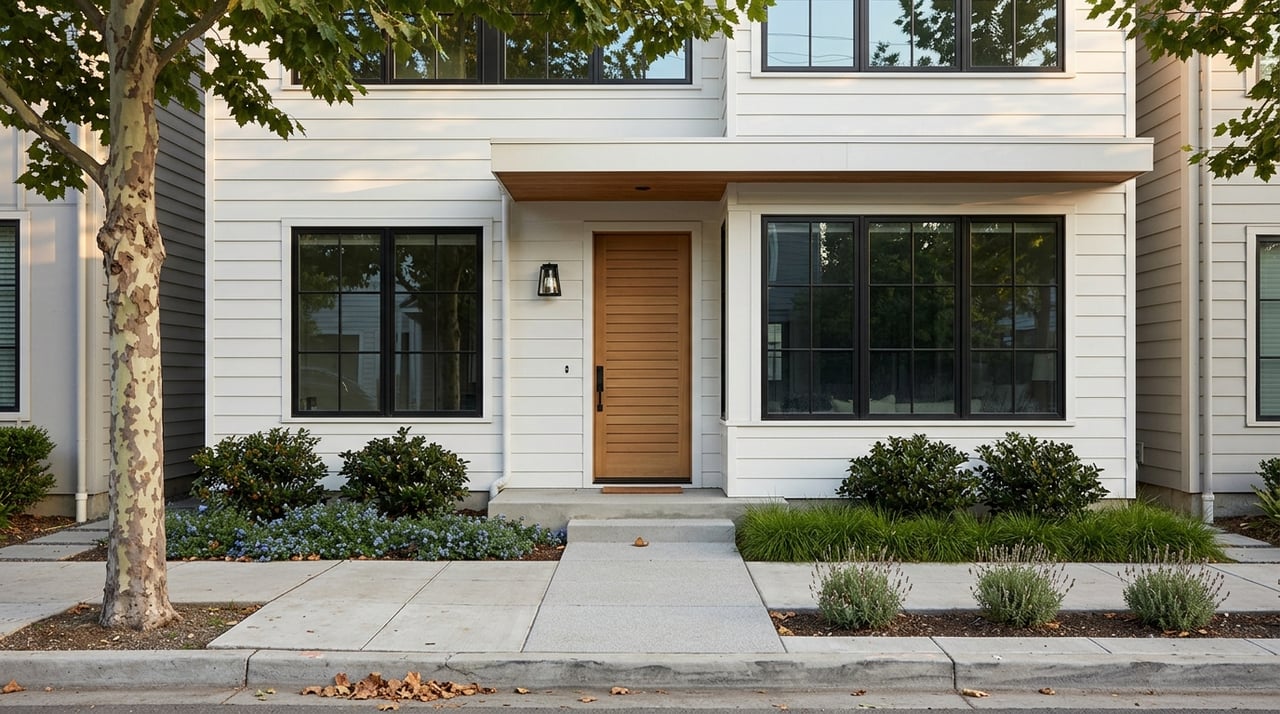
That points to a neighborhood with a range of housing types rather than one dominant format. In and near downtown, you are more likely to see a mix of condos, apartments, and adjacent residential pockets than a single uniform housing style.
This mix can be appealing if you want options. Some buyers and renters are looking for a lower-maintenance home near the center of activity, while others may prefer to live just outside the core and still stay close to downtown amenities.
Downtown San Mateo is not only about newer mixed-use planning. The city’s historic-district information says the Downtown Historic District, focused along South B Street and 3rd Avenue, retains much of its early-20th-century character.
The city also identifies Glazenwood as a unique early-1920s development of Spanish Colonial Revival homes. These details help explain why the area does not feel flat or interchangeable.
The Downtown Area Plan also calls for new development to be compatible with the historic and architectural features common to many downtown buildings while supporting a diversity of building styles. So even as downtown evolves, there is a clear effort to respect the area’s existing character.
On a day-to-day level, downtown San Mateo feels compact, active, and amenity-rich. You are close to restaurants, shops, transit, the library, entertainment, and a major park, all within a relatively walkable setting.
That can be a great fit if you enjoy convenience and an environment with more movement and activity. If you like being able to head out on foot, meet friends nearby, or keep errands simple, downtown offers a lifestyle that supports that rhythm.
At the same time, the immediate core is likely less ideal if you want larger lots, a quieter low-density setting, or a more car-dependent suburban feel. The closer you are to the center, the more the neighborhood leans into an urban-style mix of uses and activity.
Downtown San Mateo can appeal to several types of buyers and renters, especially those who value easy access over extra space. You may find it especially attractive if your priorities include:
If your wish list centers on quiet residential streetscapes or larger private outdoor areas, you may prefer neighborhoods outside the core. But if convenience and connection are high on your list, downtown San Mateo offers a strong lifestyle case.
Choosing where to live is really about matching the neighborhood to your routine, priorities, and comfort level. If you want help weighing downtown San Mateo against other Peninsula options, Frank Vento can help you find the right fit with steady, local guidance.