San Mateo's Median Home Price Is Hiding Four Different Markets
In July 2026, a single-family home in San Mateo sold at a citywide median of $2,070,000, according to a monthly report drawing on SAMCAR's MLSListings data. In that same city, San Mateo Park has recently been closing homes well north of $3.5 million, with a run of sales pushing into the $5 million range. Elsewhere in San Mateo, in Bay Meadows, a brand-new condo could be had for around $1.1 million.
All three of those transactions count toward the same citywide median. None of them describe the same buyer, the same house, or the same decision. If you're comparing San Mateo to another Peninsula city using one number pulled off a portal, you're comparing an average of markets that don't compete with each other, don't move at the same speed, and in one case, is still being built.
San Mateo is not one housing market wearing one name. It's closer to four.
There's San Mateo Park, the walled-off, wooded neighborhood in the city's northwest corner that residents simply call "The Park." There's the Baywood and Aragon corridor, San Mateo's other classic pocket, with more turnover and a lower entry point. There's Hayward Park, older and smaller-lotted, closer to El Camino Real. And there's Bay Meadows, which didn't exist as a residential neighborhood twenty years ago and is still not finished being built.
Each of these behaves like its own small economy. San Mateo Park sees roughly two to three new listings a month and homes that go under contract in about ten days when priced right. That's not a market correcting toward a citywide median. That's a market so thin that a single sale can swing the reported average by six figures, since a neighborhood averaging two or three closings a month has no cushion of volume to smooth out one large estate sale or one fixer-upper.
Baywood and Aragon see more volume, something closer to five or six sales a month across the combined area, and the entry point sits below San Mateo Park's. The two neighborhoods share a lot of what makes San Mateo Park desirable, curving pre-war streets, Tudor Revival and Spanish Colonial Revival homes, without San Mateo Park's scarcity premium.
Hayward Park is older still, built up with Craftsman-style homes and big porches near the city's Central Park, closer to El Camino Real and to daily errands than to the leafy quiet of the two neighborhoods to its west. It's the affordability release valve for buyers who want San Mateo without San Mateo Park pricing.
And then there's Bay Meadows, which is not a legacy neighborhood at all. It's a from-scratch district built where the Bay Meadows Racetrack used to run thoroughbreds, and it prices like new construction because it is new construction.
San Mateo Park's premium isn't just about square footage. It's about a street plan nobody builds anymore. The neighborhood's streets were platted a few years before the turn of the 20th century, with mature trees planted under the supervision of John McLaren, the landscape architect who designed San Francisco's Golden Gate Park, before the first home broke ground. Instead of a standard grid, San Mateo Park has 69 landscaped traffic circles, originally engineered to route horse-drawn carriages around corners without collisions. Lots run from 6,000 square feet to well over 10,000, and the housing stock is almost entirely 1910s through 1930s Tudor, Colonial, Craftsman, and Mediterranean construction, with six-figure remodels common on homes now closing in on a century old.
That history creates a real transaction wrinkle. The State Office of Historic Preservation determined back in 1990 that San Mateo Park, along with Baywood and Aragon west of El Camino, should be documented as a historic district. A National Register listing has never actually gone through. For a buyer, that means the neighborhood carries the design cachet and the scarcity of historic status without the formal protections, or the formal restrictions, that would come with an actual listing. It's worth asking your agent directly where that process currently stands before you fall in love with a house that might later face design-review requirements tied to eventual historic designation.
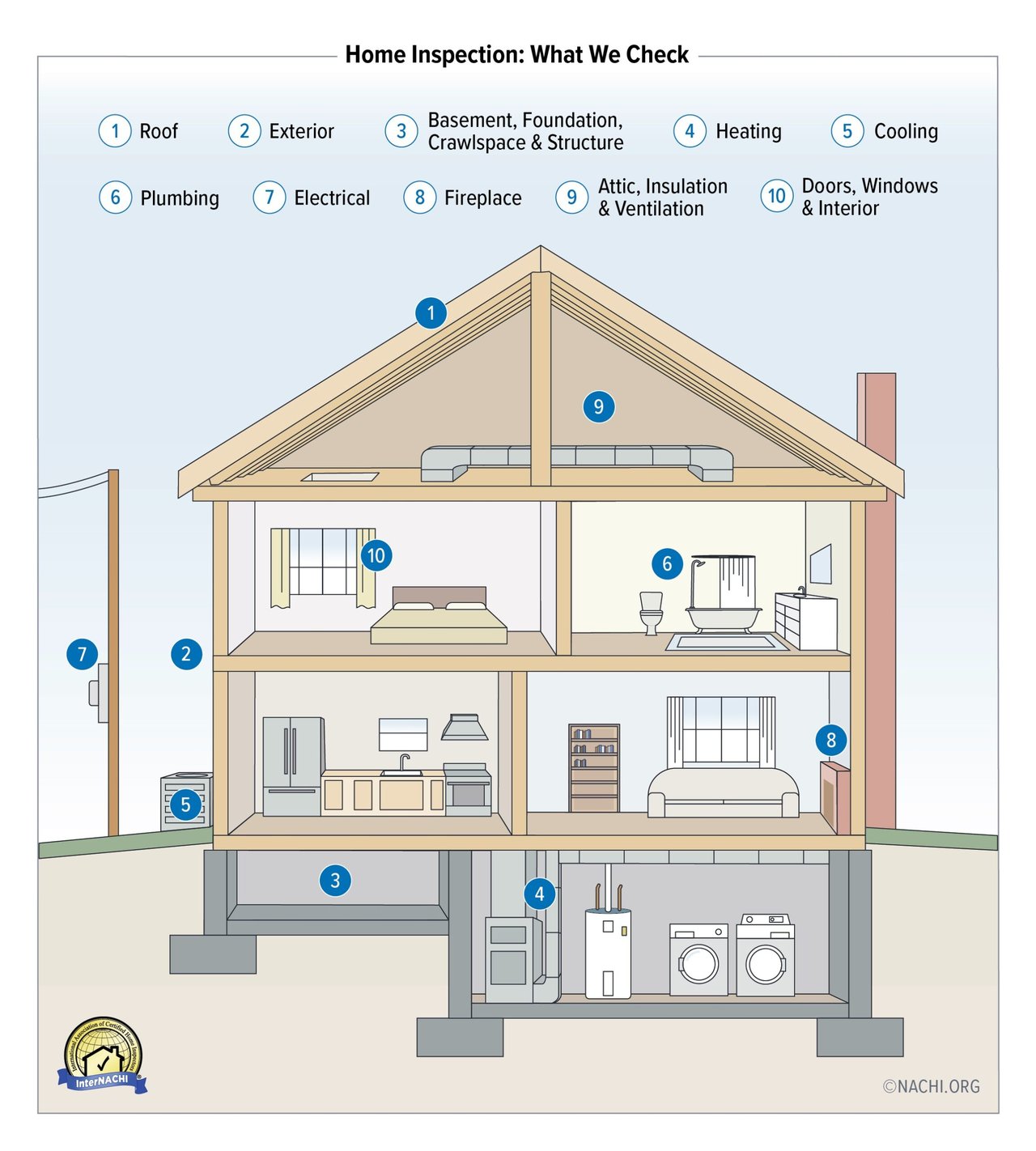
There's a second, more immediate friction that has nothing to do with history: San Mateo County properties, San Mateo Park and Baywood included, can require a private sewer lateral compliance certificate before close of escrow, on top of the standard Transfer Disclosure Statement, Natural Hazard Disclosure, and lead-based paint disclosures that apply statewide to homes built before 1978. That requirement varies by city, so it's a line item worth confirming with your transaction coordinator early rather than discovering it during a tight escrow window.
Bay Meadows is the clearest evidence that "San Mateo median price" is a category error. The 83-acre site sat empty after thoroughbred racing ended there in 2008, following years of declining attendance. Stockbridge Capital Group and its development partner Wilson Meany had acquired the track back in 1997 with a plan to build a walkable, transit-oriented community around the Caltrain stop that already sat on the property, at a time when the Peninsula's big real estate projects looked more like closed corporate campuses than mixed-use neighborhoods.
That plan is close to finished. In February 2026, Stockbridge and Wilson Meany announced they'd signed a major technology tenant to the project's final two commercial parcels, capping a build-out that will leave Bay Meadows with more than a million square feet of office space, nearly 1,000 homes, 18 acres of parks, a private high school, and over 40,000 square feet of retail. But "finished" is relative. San Mateo's own city planning documents show the Bay Meadows Phase II development agreement now runs through December 20, 2026, covering two more mixed-use buildings with 303,000 square feet of office space and 67 additional housing units still under construction.
That matters for a buyer weighing Bay Meadows against San Mateo Park or Baywood. You're not buying into a finished neighborhood, you're buying into one that will still have active construction, and the traffic and noise that come with it, for at least another few months. What you get in exchange is genuinely new housing stock, condos priced from around $1.1 million, townhomes in the $1.5 million to $2 million range, and new single-family homes running roughly $1.5 million to $2.5 million and up as of mid-2026, along with a walk to the Hillsdale Caltrain station and a small but real local business scene. Fieldwork Brewing Co., a craft brewery founded in Berkeley in 2014, runs its taproom at 3030 South Delaware Street. Bahche Mezzehouse and Wine Bar, opened by Yusuf Karadogan, a chef who grew up four blocks from the site, serves lamb chops and grilled octopus across the plaza. Blue Bottle Coffee and a Whole Foods sit within the same short walk.
None of that exists in San Mateo Park, and none of San Mateo Park's tree canopy or century-old architecture exists at Bay Meadows. They're not competing for the same buyer. They're barely the same product.
If you're weighing San Mateo against Burlingame, the same problem shows up one level up. Burlingame's own single-family median swung from a full-year 2025 figure of $2,985,000 to $3,738,000 in July 2026 alone, a 25 percent jump in a market that's genuinely low on inventory, not because Burlingame homes suddenly got more valuable across the board, but because which homes closed that month shifted the mix. Comparing two citywide medians, in San Mateo or Burlingame or anywhere on the Peninsula, tells you less about relative value than comparing two specific neighborhoods, in two specific price bands, over a rolling three to six month window.
The county-level context helps here. In the 30 days ending in early September 2026, the $2 million to $3 million single-family band across the broader San Mateo County market was the busiest price tier by volume, with homes selling at 111 percent of list in about 17 days. That's roughly where San Mateo Park's entry-level homes and Baywood's upper end both sit, which tells you those two neighborhoods, despite very different addresses and architecture, are competing for some of the same buyers in that band. San Mateo Park's true luxury tier, and most of Bay Meadows' new construction, sit outside that busiest lane entirely.
The question worth asking isn't "what does San Mateo cost." It's which San Mateo you're actually shopping for. San Mateo Park and its historic-district-adjacent scarcity. Baywood and Aragon's walkable, school-anchored middle ground. Hayward Park's more accessible entry point. Or Bay Meadows, where you're buying new construction and a still-unfinished neighborhood with a firm end date on the calendar.
Each of those is a defensible choice. None of them is well described by a single citywide number.
If you're weighing these neighborhoods against each other, or against a city like Burlingame, Frank's Home Search can walk through what's actually moving in each price band right now. Let's Connect.
Is San Mateo Park officially a historic district? Not yet. The State Office of Historic Preservation flagged San Mateo Park, along with Baywood and Aragon, as a candidate for historic-district documentation back in 1990. A National Register listing has never been finalized, so the neighborhood carries the character and the scarcity of historic status without the formal designation.
Do I need to worry about sewer laterals when buying in an older San Mateo neighborhood? In parts of San Mateo County, sellers must provide a private sewer lateral compliance certificate before close of escrow, and the requirement varies by city. This mostly comes up in older housing stock, like San Mateo Park, Baywood, and Aragon, where original plumbing infrastructure predates modern code. Ask your transaction coordinator to confirm the requirement early in the process.
Is Bay Meadows finished being built? Not entirely. The commercial side wrapped up when developers signed a major technology tenant to the last two parcels in February 2026. The city's Phase II development agreement for the residential and mixed-use side runs through December 20, 2026, covering two more buildings and 67 additional housing units.